



Indian food is famous for bold flavors. It is rich, aromatic, and full of spices. Pizza is also a comfort food that people love everywhere. When these two styles come together, the result is something exciting. Indian-inspired pizzas are unique because they mix classic pizza toppings with Indian spices, sauces, and herbs.
But there is one important challenge. Heat. Some people love spicy food. Some people cannot handle too much heat. That is why restaurants must carefully manage and balance heat when creating Indian-style pizzas.
Many customers ask questions like, “Is this pizza spicy?” or “Can you make it mild?” These questions show how important heat control is. When done correctly, the pizza tastes flavorful without being overwhelming.
In this blog, we will explain how spice levels in Indian food are balanced in Indian-inspired pizzas. We will also cover the difference between mild vs spicy pizza options and how spice tolerance affects customer choices.
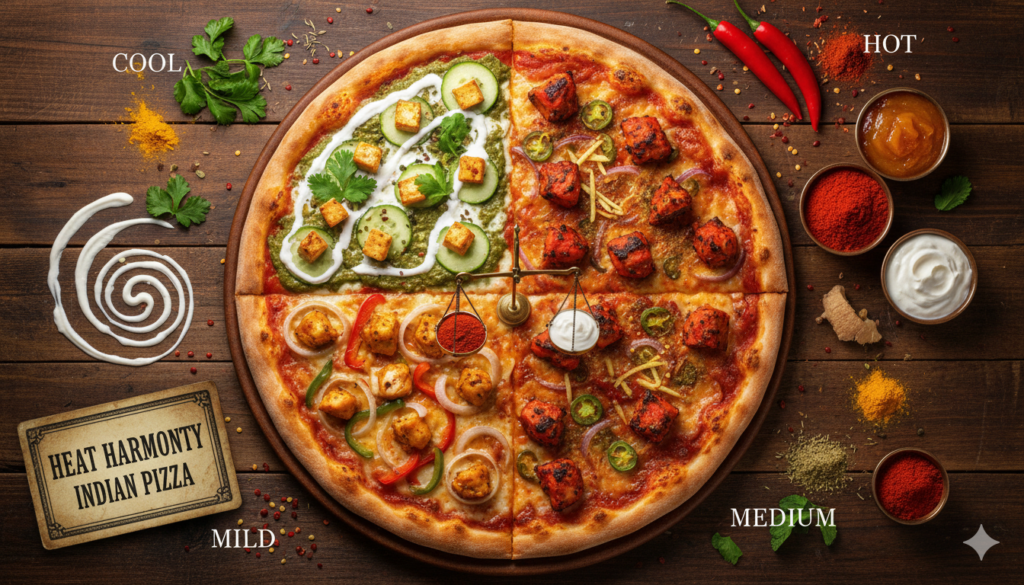
Why Heat Balance Matters in Indian-Inspired Pizza
Indian-inspired pizza is not like regular pepperoni pizza. It includes ingredients like curry sauce, tikka flavors, green chilies, and spicy chutneys. These ingredients add strong taste, but they can also add a lot of heat.
If the pizza is too spicy, customers may not enjoy it. If it is too mild, it may lose its Indian flavor. That is why balancing heat is important.
The best Indian-inspired pizzas are made with controlled heat. They allow people with different preferences to enjoy the same style of food.
Balancing spice levels in Indian food is also about making sure the flavors stay strong. Heat should support taste, not destroy it.
Understanding Heat in Indian Food
Before we talk about pizza, we need to understand how heat works in Indian cuisine. Indian food does not only rely on chili powder. It uses many ingredients that create different types of heat.
Some heat is sharp and fast. Some heat is slow and deep. Some heat stays in the mouth for longer.
This is why spice levels in Indian food feel different compared to other cuisines.
Common Sources of Heat in Indian Cooking
· Red chili powder
· Green chilies
· Black pepper
· Ginger
· Garam masala
· Mustard seeds
Not all spices are “hot.” Some are more aromatic. But when combined, they can create a strong spicy effect.
Indian-inspired pizza chefs must understand these ingredients. They must know how to keep the flavor balanced.
Indian-Inspired Pizza: More Than Just Spicy Toppings
Many people think Indian pizza is only about adding spicy chicken and chili flakes. But it is much more than that.
Indian-inspired pizzas often include:
· Butter chicken sauce
· Tikka masala sauce
· Paneer toppings
· Spiced onions and peppers
· Mint chutney drizzle
· Tandoori chicken
Each ingredient brings flavor. Some ingredients also increase heat. That is why balancing heat is an important part of making the perfect pizza.
The goal is to create a pizza that tastes Indian but still feels like pizza.
This is where the magic of managing spice levels in Indian food comes in.
How Heat Levels Are Measured in Indian-Inspired Pizzas
Most restaurants offer heat levels like mild, medium, and hot. But Indian-inspired pizza needs more detailed planning. Heat levels must match the toppings and sauces used.
Some toppings already contain spice. Some sauces are naturally spicy. If both are used together, the pizza can become too hot.
That is why many chefs use a layering system. They decide which ingredient will provide the main heat and which ingredients will provide aroma.
This helps them control spice levels in Indian food while still giving the pizza a strong taste.
Mild vs Spicy Pizza: What Is the Real Difference?
The biggest difference between mild vs spicy pizza is not only chili quantity. It is also about the type of spice used.
Mild Pizza
A mild Indian-inspired pizza focuses more on flavor than heat. It may include:
· Creamy curry sauce
· Light masala seasoning
· Mild paneer
· Sweet onions
· Less chili powder
A mild pizza still tastes Indian, but it does not burn the mouth. It is great for beginners or kids.
Spicy Pizza
A spicy pizza includes stronger heat ingredients like:
· Green chilies
· Extra red chili powder
· Spicy chutney sauce
· Hot tandoori seasoning
· Chili flakes on top
Spicy pizza is for people who love bold heat. It is also popular among customers with high spice tolerance.
Understanding mild vs spicy pizza helps customers choose the right option.
The Role of Sauce in Heat Control
Sauce is the base of the pizza. It controls the main flavor profile. In Indian-inspired pizzas, sauce is often where the heat begins.
Some sauces are creamy and mild. Others are rich and spicy.
Common Indian Pizza Sauces
· Butter chicken sauce (usually mild to medium)
· Tikka masala sauce (medium heat)
· Spicy curry sauce (medium to hot)
· Green chutney base (hot and tangy)
If the sauce is spicy, then toppings should be less spicy. If the sauce is mild, toppings can bring more heat.
This balancing method helps restaurants manage spice levels in Indian food effectively.
How Cheese Helps Reduce Heat
Cheese plays a major role in Indian-inspired pizza. It does not only add texture. It also controls spice.
Cheese is creamy and fatty. It helps cool down the tongue. This is why spicy pizzas still feel enjoyable.
Mozzarella, cheddar, and blended cheese mixes are perfect for balancing heat. They make spicy toppings feel smoother.
This is why pizzas can handle more heat compared to other Indian dishes.
Cheese helps customers with lower spice tolerance enjoy Indian flavors without discomfort.
How Meat and Paneer Affect Heat Balance
Toppings are not just for taste. They also affect heat levels.
Chicken Tikka and Tandoori Chicken
These meats are usually marinated with spices. That means they already contain heat. If you add spicy sauce with spicy meat, it becomes too strong.
Chefs often pair tandoori chicken with creamy sauce to balance the heat.
Paneer
Paneer is one of the best toppings for controlling heat. It is soft, mild, and creamy. Paneer absorbs spice but does not add heat on its own.
This is why paneer pizzas are great for people who want Indian flavor but prefer mild heat.
Paneer-based pizzas are a perfect example of balancing spice levels in Indian food.
Vegetables That Increase or Reduce Spice
Vegetables also play a big role in Indian-inspired pizza heat.
Vegetables That Add Spice
· Jalapeños
· Green chilies
· Red chili flakes
· Spicy pickled onions
· Vegetables That Reduce Spice
· Bell peppers
· Mushrooms
· Tomatoes
· Sweet onions
Adding sweet and juicy vegetables helps reduce heat and add balance. This is often done in mild vs spicy pizza options.
Vegetable toppings are also useful for customers who want flavor but have low spice tolerance.
Spice Blends: The Secret Behind Indian Pizza Flavor
One of the biggest reasons Indian-inspired pizzas taste different is the spice blends used. Indian spices are often roasted, mixed, and layered.
Some spices are warm, not hot. They create flavor without burning.
Common Spice Blends Used
· Garam masala
· Tandoori masala
· Curry powder
· Kashmiri chili powder
· Chaat masala
Kashmiri chili powder is especially popular because it adds color and mild heat. It gives pizza a deep red look without making it too spicy.
This is a smart way to control spice levels in Indian food while keeping the taste authentic.
How Restaurants Customize Spice Levels
Customization is important. Not every customer has the same taste. That is why many restaurants allow customers to choose heat levels.
Here are common customization options:
· Mild, medium, or hot sauce
· Extra cheese to reduce heat
· Add jalapeños for extra spice
· Remove green chilies
· Add creamy drizzle on top
This flexibility helps restaurants serve people with different spice tolerance levels.
Customization is also important for customers trying Indian pizza for the first time. They may want mild heat before moving to spicy options.
Spice Tolerance: Why People Handle Heat Differently
Not everyone feels spice the same way. Some people can eat hot food easily. Others struggle with mild spice.
This is because spice tolerance depends on many factors such as:
· Diet habits
· Cultural background
· Personal sensitivity
· Frequency of eating spicy food
People who eat spicy food often build tolerance over time. Their body becomes used to chili heat.
That is why restaurants cannot assume all customers want high heat. They must offer multiple levels.
Balancing spice levels in Indian food is not only about taste. It is also about customer comfort.
How Creamy Ingredients Balance Heat
Creamy ingredients are very important in Indian-inspired pizzas. They reduce heat and make flavors smooth.
Some examples include:
· Butter sauce
· Cream-based tikka sauce
· Yogurt-based marinades
· Ranch or garlic drizzle
· Cheese blends
Creamy sauces are often used in mild pizzas. They also make spicy pizzas easier to handle.
This is why many people love Indian-inspired pizza. Even if it is spicy, it still feels rich and smooth.
This is also a key difference between mild vs spicy pizza. Mild pizzas use more creamy balance.
The Role of Acid in Heat Control
Acid helps balance spice too. Ingredients like tomatoes, lemon, and vinegar add freshness. They reduce the heavy feeling of spicy food.
Many Indian-inspired pizzas include:
· Tomatoes
· Pickled onions
· Lemon seasoning
· Tangy chutneys
Acid does not reduce heat directly, but it makes the flavor feel cleaner. It keeps the pizza from tasting too heavy.
This is another important technique for balancing spice levels in Indian food.
How Baking Changes Spice Levels
Heat changes when food is baked. When pizza goes into the oven, spices become more blended. Some spices become milder, while others become stronger.
For example:
Chili powder can become deeper in flavor
Garlic becomes sweeter
Masala blends become more aromatic
This baking process helps Indian-inspired pizza taste balanced. It spreads the heat across the pizza instead of making it sharp in one bite.
That is why baked spice feels different than raw spice.
This is a unique part of balancing spice levels in Indian food in pizza form.
Tips for Choosing the Right Heat Level
If you are trying Indian-inspired pizza for the first time, choosing the right heat level matters.
Here are simple tips:
· If you avoid spicy food, start with mild
· If you enjoy medium salsa, try medium heat
· If you eat spicy Indian curries often, go for hot
· If you are unsure, ask for sauce on the side
Understanding your spice tolerance helps you enjoy the meal more.
Also, knowing the difference between mild vs spicy pizza makes ordering easier.
Why Indian-Inspired Pizza Is Perfect for Everyone
Indian-inspired pizzas are special because they can be customized. They offer bold flavor for spice lovers and creamy comfort for mild eaters.
This is why they are becoming more popular.
The balance of sauce, toppings, cheese, and spices creates a unique experience. It brings the taste of Indian cuisine into a fun pizza style.
Most importantly, it shows how well spice levels in Indian food can be controlled when done correctly.
Final Thoughts: Balance Makes Indian Pizza Delicious
Indian-inspired pizza is not only about heat. It is about flavor. The best pizzas balance spice, creaminess, and toppings to create a perfect bite.
Restaurants carefully manage sauces, spice blends, cheese levels, and toppings to control heat. They also consider customer preferences. That is why understanding spice tolerance is so important.
Whether you prefer mild heat or extra spicy flavor, Indian-inspired pizza offers something for everyone. From creamy butter chicken pizzas to bold tandoori creations, the options are endless.
When you understand mild vs spicy pizza, it becomes easier to choose the right meal. And when you understand spice levels in Indian food, you appreciate how much skill goes into making the perfect Indian-inspired pizza.
So next time you order, try a new heat level. Explore different flavors. And enjoy the perfect balance that makes Indian-inspired pizza so unforgettable.
FAQ: How Heat Levels Are Balanced in Indian-Inspired Pizzas
1) Is Indian-inspired pizza spicy, or can it be mild?
Indian-inspired pizza can be mild, medium, or hot depending on the sauce, spice blend, and toppings. Many places build flavor first (aroma + masala) and then adjust heat so it doesn’t overpower the bite.
2) What does “mild vs medium vs hot” usually mean for Indian-style pizzas?
Most kitchens start with a flavorful base and then increase heat by adding more or fewer chilies/chili powder (or spicier chutneys). “Hot” usually means more chili-forward ingredients layered into the sauce or toppings, not just extra flakes on top.
3) Which ingredients make an Indian-inspired pizza hotter?
Common heat boosters are green chilies, red chili powder, spicy chutneys, jalapeños, and hot tandoori-style seasonings. If your pizza has a spicy base sauce and spicy toppings, it will feel much hotter.
4) How do restaurants reduce spice without losing Indian flavor?
They balance heat using creamy ingredients (cheese, cream, yogurt) and sometimes keep the sauce mild while letting one topping provide the “kick.” Cutting back on chili flakes is also a common way to keep it family-friendly.
related blogs
Health Benefits of indian spices in indian pizza
ULTIMATE GUIDE TO BOMBAY CURRY PIZZA IN ISELIN